Study extra about how TypingDNA Confirm 2FA makes use of typing biometrics and Root of Trust in authentication. Group contributions speed up innovation, as seen in projects beneath groups just like the CHIPS Alliance or Open Compute Project (OCP). The Web Society has been a proud host and organizer of the NDSS Symposium for over 30 years. Michael Peters is a Principal Engineer in Emerging Technologies in Red Hat’s Office of the CTO.
A Cluster Of Patterns For Trusted Computing
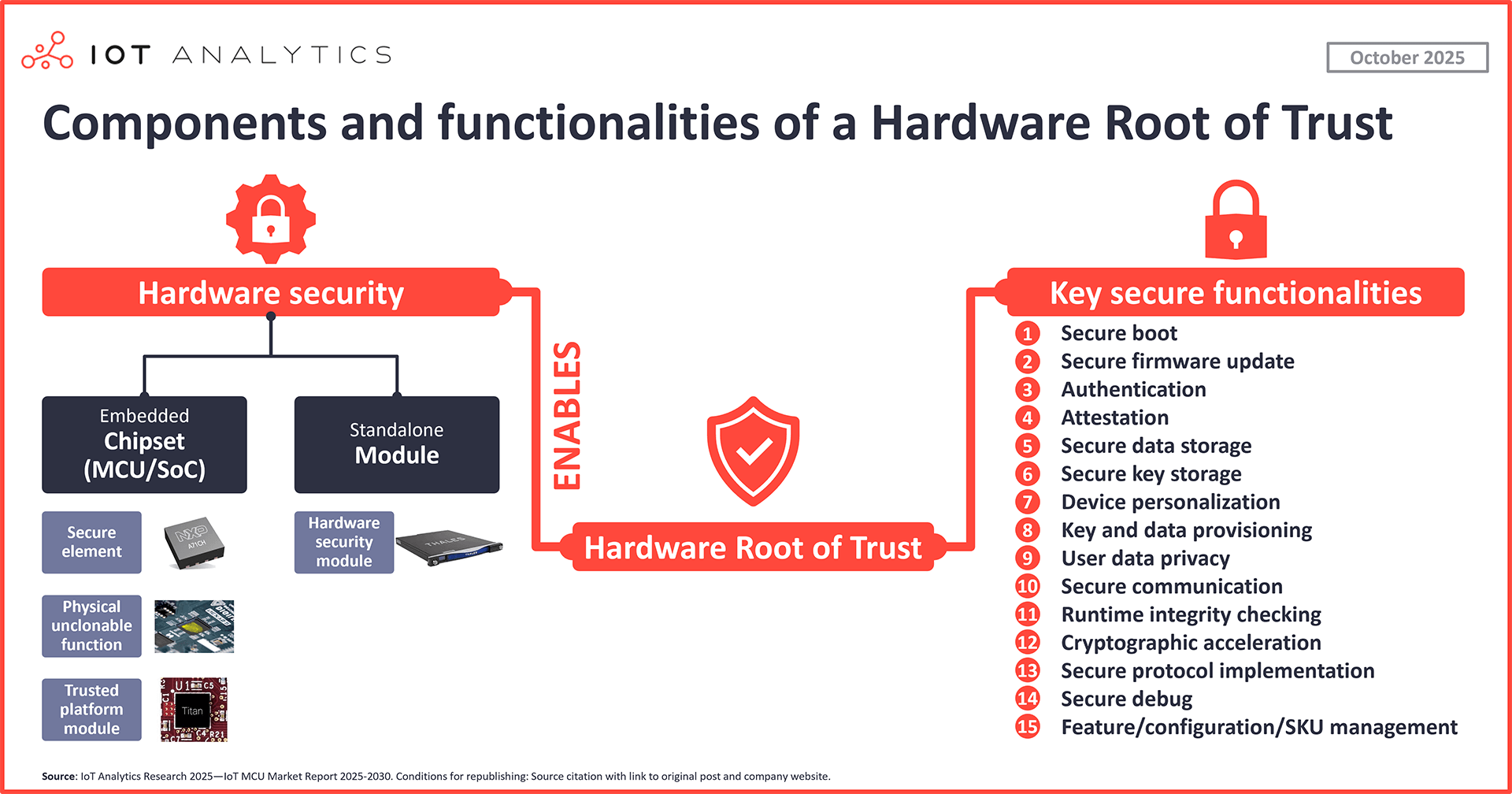
The Basis of Trust is the inspiration of a safe system, providing a place to begin for establishing belief. It is often a hardware-based part or set of components that are inherently trusted. The RoT ensures the integrity and security of a system from the beginning of the boot course of. Understanding the place we place our trust in a system helps us perceive where we’re most susceptible.
Hosted on platforms like GitHub, these initiatives present fully auditable Register-Transfer Level (RTL) code, firmware (often in safe languages like Rust), and verification instruments. Weak implementation, poor key lifecycle administration, outdated firmware, or misconfigured access insurance policies can still create danger. Software Program safety remains to be essential, but hardware-backed trust offers methods a stronger starting point.
Person Will Get A Model New System And Is Trying To Log Right Into A Mobile App Using 2fa
Hosted on GitHub, it invites contributions by way of a community-driven mannequin, with common updates and transparent roadmaps. Latest milestones, like the 2025 launch https://www.mrosidin.com/site-software-engineer-rpm.html of the Earl Grey chip, demonstrate its real-world viability. Trust is one thing we encounter every day in many alternative contexts, whether or not it’s with folks, establishments or products.

Hardware Root Of Trust
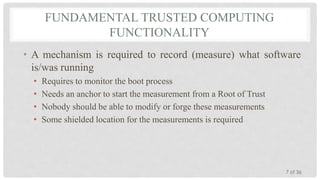
Utilizing low-level hardware units to create roots of belief to construct up trust all through the system’s software is a great way of accelerating the protection of techniques even when our physical entry is proscribed. Hardware roots of trust are an under-utilized software that each system architect should be serious about. Nothing should be trusted simply due to its location on the community or claims from the developer, which are definitely critical in today’s heterogeneous and hybrid cloud computing environments. As A Substitute, all interactions have to be verified and all access to data must be authenticated and approved, resulting in specific trust.
In distributed ecosystems, it determines which parties can establish belief, which could be revoked, and how consistent authentication remains throughout distributors and environments. Introduced in 2022 by the CHIPS Alliance, it originated from OCP and has since open-sourced its RTL code, firmware, and verification tools on GitHub. A Root-of-Trust establishes from system boot that authorized software is working on the system.
- The UID is used for gadget identification and communication with other system elements.
- The new primitive is a randomized polynomial, which has $k$-independent uniform coefficients in a major order subject.
- This low-level part that we use to construct belief between different parts is identified as a root of belief.
- Public and private keys inside the TPM are utilized for varied cryptographic operations, attestation, and knowledge safety, contributing to the overall safety of the platform.
- This can provide safety from a quantity of types of assault, corresponding to package hijacking, name typo squatting and Photo Voltaic Winds-style infiltrations.
A hardware root of belief strengthens cryptographic techniques by defending the start line of belief. It can generate, store, or shield private keys so they’re harder to extract than keys saved only in software program. A Root-of-Trust is an immutable process or identification used as the primary entity in a trust chain. Therefore, no ancestor entity can present a trustable attestation (in digest or otherwise) for the Root-of-Trust’s preliminary code and information state. To put this one other way, a Root-of-Trust for an embedded developer is an unchangeable id and minimal software program set that may efficiently authenticate itself and facilitate safe operations on the system. A crucial side of the Hardware Root of Trust is the entropy supply to feed a device’s cryptographic algorithms.
Leave a Reply